
Financial Diversification & Preparing for What’s in Store
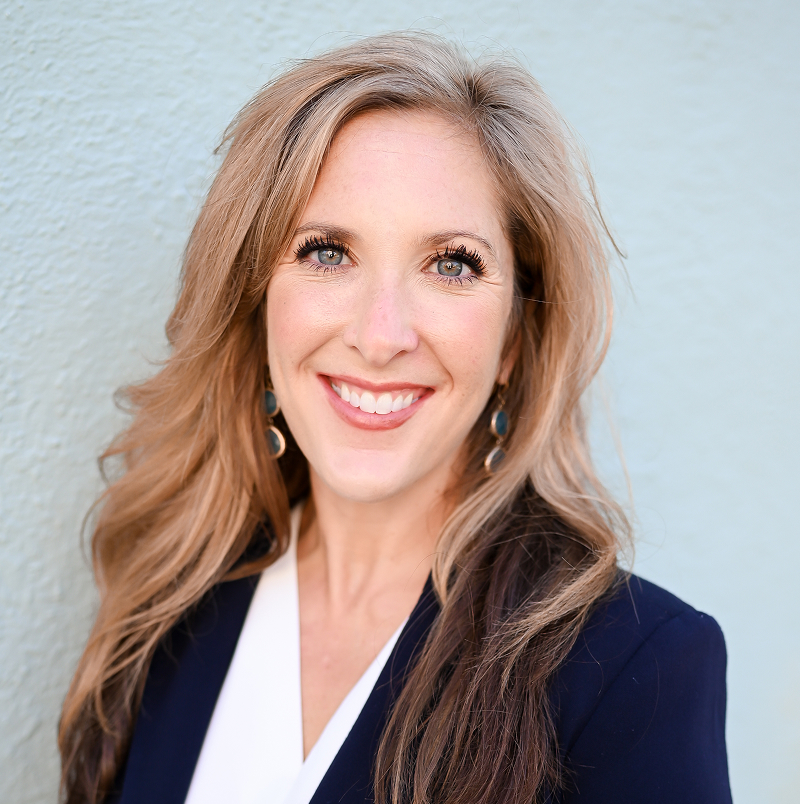 Sarah Irving
As my first blog post in 2026, it is hard to believe we are already halfway through the first month; however, when I take a moment to reflect, a LOT has already happened in a short period of time. Personally, I have been blessed and lucky enough to have enjoyed warm weather and beautiful views in both Florida and California, and to have had the chance to see extended family and friends I have not seen in over a year. I am also honored to say, this week I celebrated my Capstone event for the Schwab Executive Leadership Program, which I have been participating in over the last year with 40 of the brightest minds from RIAs across the country. What a way to ring in 2026!

Had some time to look at what’s on the horizon in San Diego. Pinch me!
From a professional standpoint, I would be remiss if I did not acknowledge the abundance of economic news and global headlines. Some of these headlines can be confusing, overwhelming, and the trend always leans towards fairly negative.
As we enter 2026, investors are facing a familiar challenge: separating what matters from what makes headlines. A fiduciary approach isn’t about predicting the next market move—it’s about building a strategy that can hold up across a range of outcomes.
Here are some key things we will be keeping in mind for 2026.
Broader Market Participation
Positive stock market returns have more legs under them when returns aren’t driven by just a small group of companies. In 2026, watch whether leadership continues to expand across sectors, smaller companies, and international markets. Broader participation can reduce concentration risk—but may also lead to more rotation and volatility. Charles Schwab’s Liz Ann Sonders recently commented:
“In the latter part of 2025, performance leadership started to shift away from a narrow set of very large companies toward the so-called average stock. The equal-weighted S&P 500 has recently been outperforming its cap-weighted counterpart, indicating that gains are no longer just being driven exclusively by the largest constituents. […]
This matters because equal-weighted indexes are often viewed as a barometer of market breadth. When equal-weight outperforms cap-weight, it suggests that returns are being shared more evenly across companies, rather than concentrated in a handful of giants.”

Interest Rates Still Drive the Conversation
Interest rates influence bonds, borrowing costs, housing, and valuations. There is not a crystal ball on whether interest rates will continue to come down in the short term, so instead betting on rate cuts, focus on whether your portfolio is positioned to work if rates stay higher, fall slowly, or move unexpectedly.

Inflation: Stickiness Matters
The December CPI report came out this Tuesday showing inflation in line with expectations, rising 0.3% month over month and 2.7% year over year. Core goods prices were flat in December and core services prices rose slightly. Below is a breakdown of the components CPI (no wonder holiday flights felt pricier!). If service prices continue their rise and small businesses feel they have to increase their prices to keep up with inflation, then we could see some stickiness. On the other hand, wages and rent prices have eased, which could put the breaks on inflation.

Geopolitical Tensions Can Spark Volatility
Global conflict, trade disruptions, and political uncertainty are difficult to predict, but they can create sharp market moves. The most effective response is preparation and diversification—not reacting to headlines.
When we step back and look at decades of market history, a consistent pattern emerges: markets have shown remarkable resilience in the face of global conflicts. While every conflict is unique and human costs are profound, the long-term trajectory of diversified markets has remained upward.
Why? Because markets ultimately reflect:
- Corporate innovation and productivity
- Consumer demand and economic growth
- The ability of businesses to adapt to changing conditions
In many cases, markets begin recovering before conflicts are resolved, once uncertainty starts to decline or expectations stabilize.
Diversification Remains Key
Many portfolios are more concentrated than investors realize, especially in market-cap-weighted funds. It’s worth reviewing whether your exposure is overly dependent on a few companies, sectors, or themes.
Global conflicts also reinforce the value of diversification. No single region, country, or sector is immune to geopolitical risk. A well-diversified portfolio spreads exposure across asset classes, industries, and geographies—helping reduce the impact of any one event.
Diversification doesn’t prevent losses during turbulent periods, but it can help smooth the ride and support long-term outcomes.

Bottom Line: Long-Term Investing & Diversification
Rather than reacting to today’s headlines, the more productive approach is to stay grounded in strategy, diversification, and discipline. In uncertain times, perspective isn’t just comforting—it’s powerful.
The best strategy for 2026 isn’t a bold prediction—it’s a disciplined plan. A well-diversified portfolio, aligned to your goals and supported by rebalancing and risk management, is built to navigate whatever the year brings. Cheers to another year!
About Sarah Irving
Sarah Irving is a Partner and Financial Advisor at Meridian Financial Partners. She writes about diversification, estate planning, and financial resilience.
Read full bioTopics: Investment Management
Comments
No comments yet. Be the first to share your thoughts.
Leave a comment
Comments are reviewed by our team before they are published. Your email address is never shown publicly.